

Ailanthus webworm
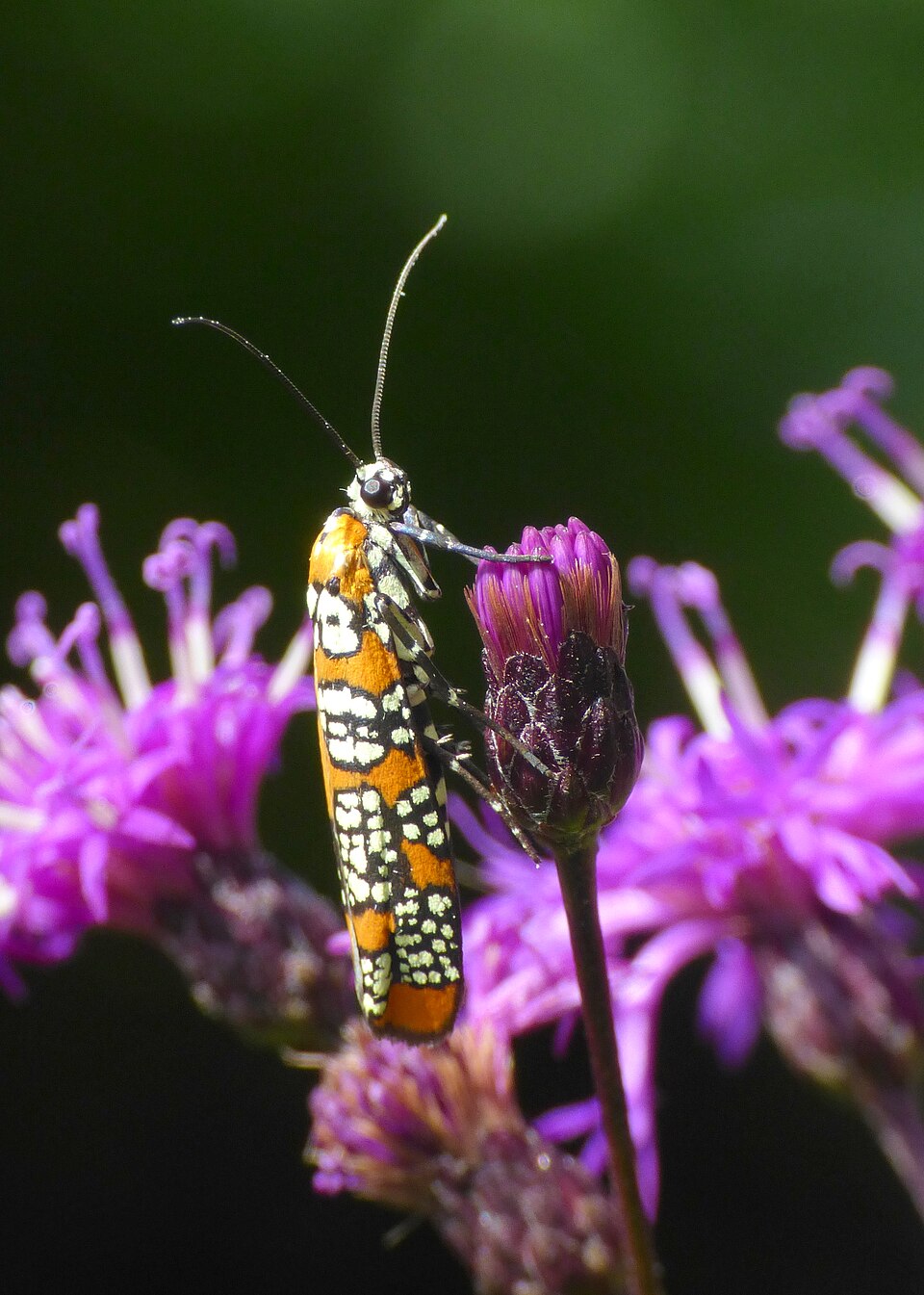
The ailanthus webworm is a small, bright moth with orange wings covered in white spots ringed with black. When it sits still it looks like a little beetle, and when it flies it looks like a wasp. It flies in the daytime and visits flowers.
How fast is it?
Fun facts
Its caterpillars pull leaves together with silk to make a shared web nest and live inside it.
One web can hold eggs, caterpillars and grown-ups all at the same time, from several generations.
It can go from egg to pupa in just four weeks.
It spread north after it started living on the tree-of-heaven, a tree that came from China.
Its caterpillars have a wide greenish-brown stripe down the back and thin white and olive stripes on the sides.
Most asked questions about Ailanthus webworm
?Is the ailanthus webworm harmful?
No. It does not bite or sting, and the moth even helps pollinate flowers.
?What does the ailanthus webworm eat?
The caterpillars eat leaves of the tree-of-heaven and paradise tree, and the moths drink nectar.
?Why does it look like a wasp?
When it flies, its bright colours and shape make it look a lot like a wasp.
For bug experts
- Scientific name
- Atteva aurea
- Named by
- Fitch, 1856
- Group
- Moths
- Family
- Attevidae
- Classification
- Insecta > Lepidoptera > Attevidae
- Lives on
- North America
- Also known as
- Ailanthus webworm moth
Where the facts come from
- Ailanthus webworm (Wikipedia, CC BY-SA 4.0): what it looks like, where it lives, what it eats, sizes and fun facts, retold in simple words.
- Picture by Greg Hume. CC BY-SA 4.0, Wikimedia Commons. The round sticker of this bug is cut from the same picture.
If we got something wrong, sorry, we are bug fans, not a science journal. Tell us at hello@bugwiki.app and we will fix it.
 Atlas moth
 Luna moth
 Hummingbird hawk-moth
 Domestic silk moth
 Isabella tiger moth
 Polyphemus moth
 Goldenrod crab spider
 Spinybacked orb-weaver
 Regal jumping spider
 Giant Gippsland earthworm
 June bug
 Parktown prawn