

Arctic bumblebee
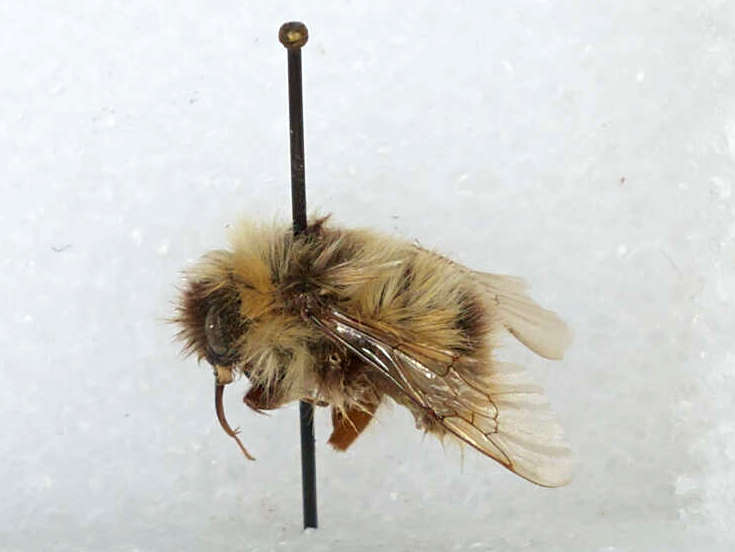
The Arctic bumblebee lives in one of the coldest places on Earth, far up north near the North Pole. It wears an extra thick, fluffy coat of black and orange-yellow hair to keep warm. It can even warm itself up from the inside, so it can fly when it is almost freezing.
How fast is it?
Fun facts
It can heat its body up to 38 degrees, a little warmer than your own body.
Its nest is so well insulated that once the first workers are grown, it stays at a cosy 35 degrees inside.
Young queens sleep for about nine months, often hidden in an old mouse nest.
Summer in the Arctic is very short, so the queen lays a big batch of around 20 eggs to get the family going quickly.
It is one of only three kinds of bumblebee that live above the Arctic Circle.
Most asked questions about Arctic bumblebee
?How does the Arctic bumblebee stay warm?
It has an extra thick hairy coat, warms its body from the inside and builds well insulated nests.
?Where does the Arctic bumblebee live?
In the Arctic, including Canada, Alaska, Greenland, northern Scandinavia and Arctic Russia.
For bug experts
- Scientific name
- Bombus polaris
- Group
- Bees and bumblebees
- Family
- Apidae
- Classification
- Insecta > Hymenoptera > Apidae
- Lives on
- North America, Europe, Asia
Where the facts come from
- Bombus polaris (Wikipedia, CC BY-SA 4.0): what it looks like, where it lives, what it eats, sizes and fun facts, retold in simple words.
- Picture by Pixel Acuity LLC. CC0, Wikimedia Commons. The round sticker of this bug is cut from the same picture.
If we got something wrong, sorry, we are bug fans, not a science journal. Tell us at hello@bugwiki.app and we will fix it.
 Western honey bee
 Buff-tailed bumblebee
 Violet carpenter bee
 Giant honey bee
 Wallace's giant bee
 Himalayan giant honey bee
 Dogbane beetle
 Predatory bush-cricket
 Orchard swallowtail
 Black cutworm
 Australian paper wasp
 Black field cricket