

European antlion
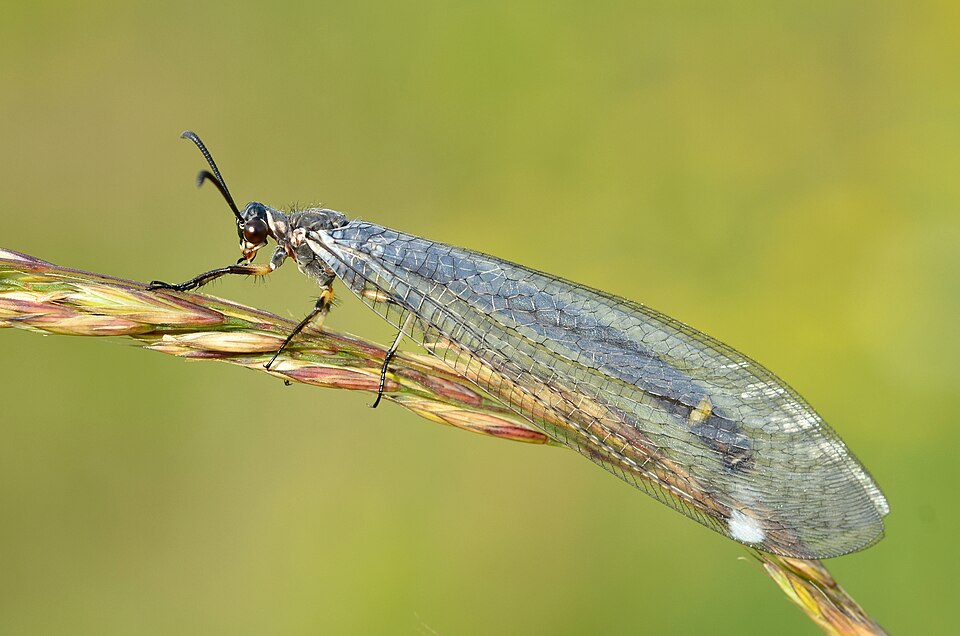
The European antlion starts life as a sneaky little larva in the sand. It digs a funnel-shaped pit and hides at the bottom, waiting for an ant to slip in. When it grows up, it becomes a slim, gentle insect with long, clear wings.
How fast is it?
Fun facts
It is the best known of all the antlions.
Its larva has a mostly black head, which is why in Dutch it is called the blackhead antlion.
Tiny bits of sand and soil stick to the hairs on the larva's head, so the black colour can be hard to see.
The grown-up has clear wings without black spots, which helps tell it apart from a very similar antlion.
Most asked questions about European antlion
?What does an antlion eat?
The larva catches ants and other small bugs that fall into its sand pit.
?Is the antlion dangerous?
No. It is harmless to people.
?Why is it called an antlion?
Because its larva is a fierce hunter of ants, like a tiny lion lying in wait.
For bug experts
- Scientific name
- Myrmeleon formicarius
- Group
- Other insects
- Family
- Myrmeleontidae
- Classification
- Insecta > Neuroptera > Myrmeleontidae
- Lives on
- Europe
Where the facts come from
- Myrmeleon formicarius (Wikipedia, CC BY-SA 4.0): what it looks like, where it lives, what it eats, sizes and fun facts, retold in simple words.
- Picture by Gilles San Martin from Namur, Belgium. CC BY-SA 2.0, Wikimedia Commons. The round sticker of this bug is cut from the same picture.
If we got something wrong, sorry, we are bug fans, not a science journal. Tell us at hello@bugwiki.app and we will fix it.
 Common earwig
 Silverfish
 Chigoe flea
 Giant earwig
 Grannom
 Firebrat
 Sacred scarab
 Giant desert centipede
 Mopane emperor moth
 Striped bark scorpion
 Chilean rose tarantula
 Blue death-feigning beetle
.jpg)