

Bug card No. 0610 of 1,500
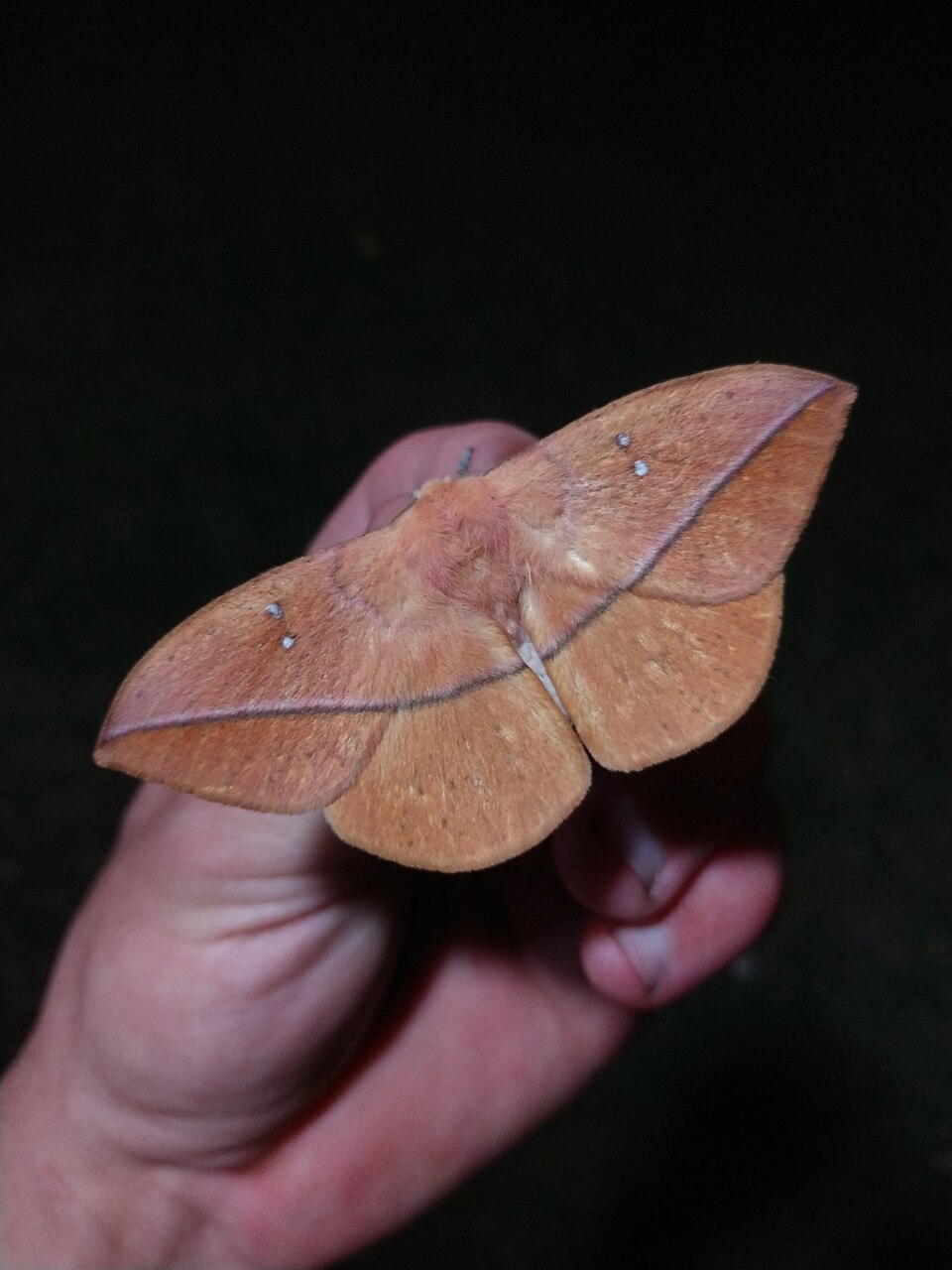
Giant silkworm moth
Lonomia obliqua
The giant silkworm moth is a moth from South America, but it is famous for its caterpillar. The caterpillar is green or brown and covered in little tufts of spiky bristles. It hides so well on tree bark that people often touch it by mistake.
Lives in
Southern Brazil, Uruguay, Paraguay and Argentina, on trees
Length
4.1 to 6.7 cm (1.6 to 2.6 in)
the caterpillarWhat does it eat?
The caterpillar munches the leaves of trees and lives on their branches and trunks.
How big is it?
How long is it?
🧱as long as 2 toy building bricks in a row⚽could fly across a whole football pitch in 21 seconds⚡moves 75 times its own body length every second
How big is Giant silkworm moth compared to YOU?
Just maths in your browser. Nothing is saved or sent anywhere.
How fast is it?
A kid running fast about 13 km/h (8.1 mph)
Giant silkworm moth about 18 km/h (11 mph)
A grown-up on a bike about 25 km/h (16 mph)
A car driving in town about 50 km/h (31 mph)
you asked
Most asked questions about Giant silkworm moth
?How big is the caterpillar?
About 4 to 7 centimetres long, a bit longer than your finger.
?Where does it live?
In southern Brazil and nearby countries like Uruguay, Paraguay and Argentina.
For bug experts
- Scientific name
- Lonomia obliqua
- Named by
- Walker, 1855
- Group
- Moths
- Family
- Saturniidae
- Classification
- Insecta > Lepidoptera > Saturniidae
- Lives on
- South America
- Also known as
- Giant silk moth
Where the facts come from
- Lonomia obliqua (Wikipedia, CC BY-SA 4.0): what it looks like, where it lives, what it eats, sizes and fun facts, retold in simple words.
- Picture by Jhonatan Santos. CC BY-SA 4.0, Wikimedia Commons. The round sticker of this bug is cut from the same picture.
If we got something wrong, sorry, we are bug fans, not a science journal. Tell us at hello@bugwiki.app and we will fix it.
 Atlas moth
 Luna moth
 Hummingbird hawk-moth
 Domestic silk moth
 Isabella tiger moth
 Polyphemus moth
 Elephant mosquito
 Hercules ant
 Rufous net-casting spider
 Lorquin's admiral
 Paris peacock
 Darwin's beetle