

Greater wax moth
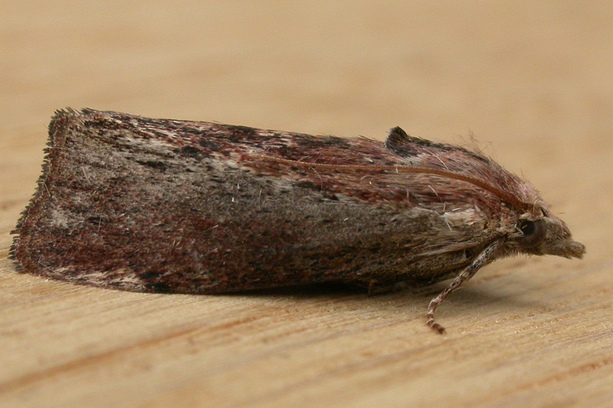
The greater wax moth is a plain brown grey moth that sneaks into beehives. Its fat white caterpillars live inside the hive and eat the wax honeycomb. Beekeepers do not like it, but scientists find it very interesting.
How big is it?
How long is it?
How wide are its wings?
How big is Greater wax moth compared to YOU?
Just maths in your browser. Nothing is saved or sent anywhere.
How fast is it?
Fun facts
Its caterpillars can chew up and break down plastic bags, which scientists find very exciting.
Boy moths make very high sounds that people cannot hear, to help find a girl moth.
A mother moth hides her eggs in tiny cracks inside the beehive so the bees do not find them.
One mother can lay up to 1800 eggs.
Scientists often use its caterpillars in their labs to study and learn new things.
Most asked questions about Greater wax moth
?What does the greater wax moth eat?
Its caterpillars eat the wax combs of beehives, plus pollen, a little honey and old bee skins.
?Is the greater wax moth harmful?
Not to people. But its caterpillars can damage beehives, so beekeepers try to keep it out.
?Can wax moth caterpillars eat plastic?
Yes, scientists found that they can break down a kind of plastic called polyethylene.
For bug experts
- Scientific name
- Galleria mellonella
- Group
- Moths
- Family
- Pyralidae
- Classification
- Insecta > Lepidoptera > Pyralidae
- Lives on
- Europe, Asia, Africa, North America, South America, Australia and Oceania
- Also known as
- Honeycomb moth
Where the facts come from
- Galleria mellonella (Wikipedia, CC BY-SA 4.0): what it looks like, where it lives, what it eats, sizes and fun facts, retold in simple words.
- Picture by dhobern. CC BY 2.0, Wikimedia Commons. The round sticker of this bug is cut from the same picture.
If we got something wrong, sorry, we are bug fans, not a science journal. Tell us at hello@bugwiki.app and we will fix it.
 Atlas moth
 Luna moth
 Hummingbird hawk-moth
 Domestic silk moth
 Isabella tiger moth
 Polyphemus moth
 Spitting spider
 Khapra beetle
 Human flea
 Kudzu bug
 Ox warble fly
 Eastern subterranean termite