

Spanish slug
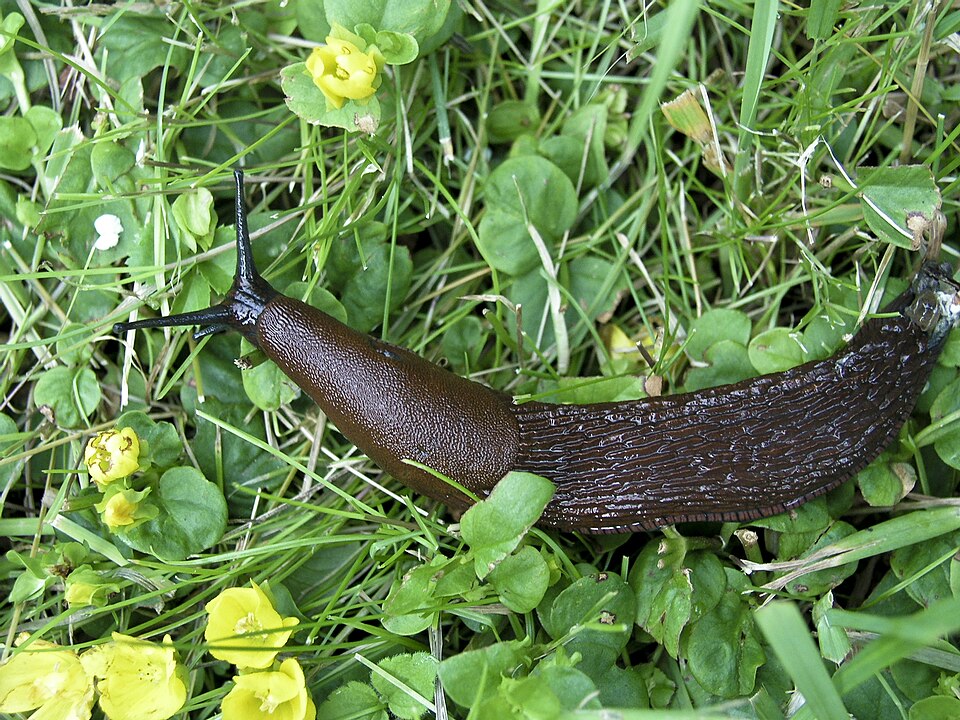
The Spanish slug is a big, slimy slug with no shell, usually brick red or orange brown. It glides along on one big foot and leaves a trail of slime. Gardeners do not like it, because it eats lots of plants.
How big is it?
How long is it?
How big is Spanish slug compared to YOU?
Just maths in your browser. Nothing is saved or sent anywhere.
How fast is it?
Fun facts
It lives for only about one year. The grown-ups appear in summer and die before winter.
It can be yellow, red, brown or even black, but brick red is the most common colour.
It reached Estonia in 2008 and has spread to almost every country in Europe since the 1950s.
For many years scientists called it by the wrong name, because it looks almost exactly like another slug from Portugal.
When there are lots of them in one place, they can be a real problem for farmers and gardeners.
Most asked questions about Spanish slug
?Why is the Spanish slug a problem?
It spreads fast, can live in big numbers and eats garden plants and crops.
?How big is a Spanish slug?
A grown-up is about 6 to 14 centimetres long.
?Is the Spanish slug dangerous to people?
No. It is harmless to people, but it is a big pest in gardens.
Myth buster
Myth: The Spanish slug came from Spain in boxes of vegetables.
Truth: Probably not. That is an old, wrong story. It is actually rare in Spain, and it may first come from France or Spain, but nobody knows for sure.
For bug experts
- Scientific name
- Arion vulgaris
- Named by
- Moquin-Tandon, 1855
- Group
- Snails, slugs and worms
- Family
- Arionidae
- Classification
- Gastropoda > Stylommatophora > Arionidae
- Lives on
- Europe, Asia, North America
- Also known as
- Lusitanian slug, Iberian slug, Killer slug
Where the facts come from
- Spanish slug (Wikipedia, CC BY-SA 4.0): what it looks like, where it lives, what it eats, sizes and fun facts, retold in simple words.
- Picture by Xauxa Håkan Svensson. CC BY-SA 3.0, Wikimedia Commons. The round sticker of this bug is cut from the same picture.
If we got something wrong, sorry, we are bug fans, not a science journal. Tell us at hello@bugwiki.app and we will fix it.
 Garden snail
 Giant African land snail
 Leopard slug
 Bladder snail
 Medicinal leech
 Common earthworm
 Queensland fruit fly
 Ant woodlouse
 Rose aphid
 Brassica bug
 Oriental mole cricket
 Bowl and doily spider