

Spurge hawk-moth
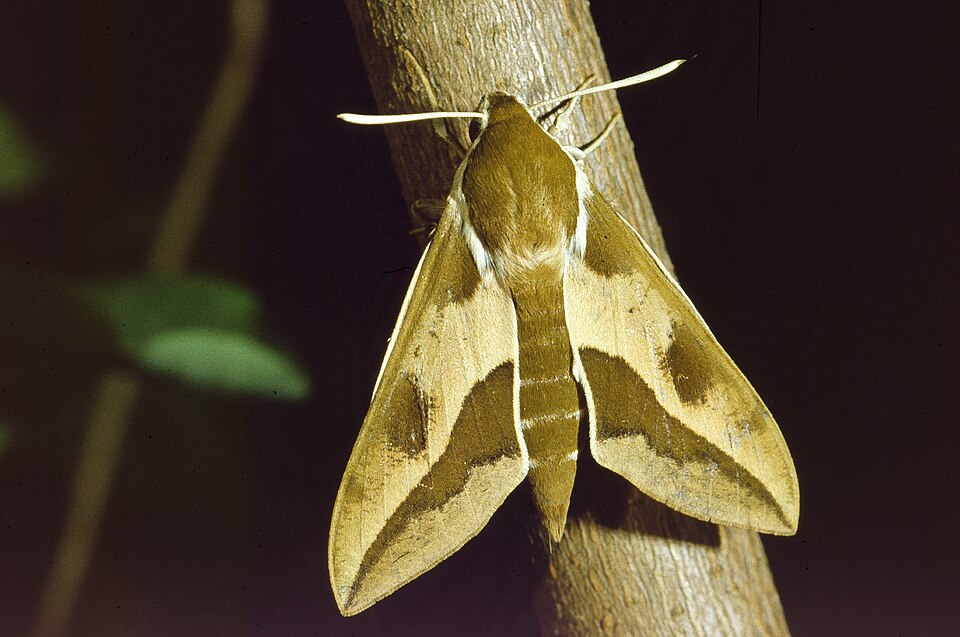
The spurge hawk-moth is a pretty moth with grey and olive-brown front wings and pink back wings. Its caterpillar is even more eye-catching: black with white dots and bright coral-red spots. It even has a little horn at the end of its body.
How fast is it?
Fun facts
The mother's eggs are covered in a sticky glue, so they stay on the tiny spurge leaves.
The baby caterpillars are all black. Their white and red spots appear as they grow.
The caterpillar has a horn at its back end that is red at the bottom and black at the tip.
Before it turns into a moth, the caterpillar buries itself in loose dry sand.
Most asked questions about Spurge hawk-moth
?What does the spurge hawk-moth caterpillar eat?
It eats the leaves of spurge plants.
?Is the spurge hawk-moth caterpillar poisonous?
It cannot hurt you. Its bright colours are just very easy to see.
?What does the spurge hawk-moth caterpillar look like?
It is black with lots of white dots, rows of big white and red spots, a red head and a horn at the back.
For bug experts
- Scientific name
- Hyles euphorbiae
- Named by
- Linnaeus, 1758
- Group
- Moths
- Family
- Sphingidae
- Classification
- Insecta > Lepidoptera > Sphingidae
- Lives on
- Europe, Asia
Where the facts come from
- Hyles euphorbiae (Wikipedia, CC BY-SA 4.0): what it looks like, where it lives, what it eats, sizes and fun facts, retold in simple words.
- Picture by jean-pierre Hamon. CC BY-SA 3.0, Wikimedia Commons. The round sticker of this bug is cut from the same picture.
If we got something wrong, sorry, we are bug fans, not a science journal. Tell us at hello@bugwiki.app and we will fix it.
 Atlas moth
 Luna moth
 Hummingbird hawk-moth
 Domestic silk moth
 Isabella tiger moth
 Polyphemus moth
 Wasp spider
 Common wasp
 Violet carpenter bee
 Large bee-fly
 Viceroy butterfly
 Green shield bug