

True armyworm
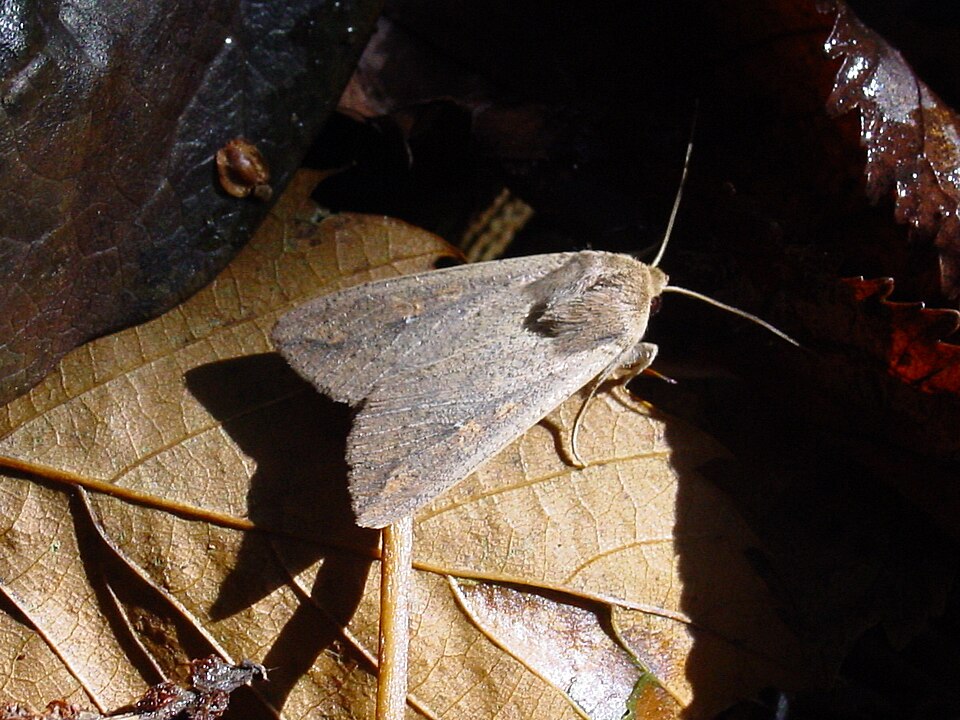
The true armyworm is a brownish moth that flies at night. Its caterpillars got their name because they march together in long lines from field to field, like a little army. The moths travel too: north in spring and south again in autumn.
How big is it?
How wide are its wings?
How big is True armyworm compared to YOU?
Just maths in your browser. Nothing is saved or sent anywhere.
How fast is it?
Fun facts
It can hear very well, which helps it find a mate and escape from hungry bats.
A female can lay 500 to 1500 eggs in her life, up to 80 in one cluster.
Its eggs are covered in something sticky that glues them to leaves and helps hide them.
If a young caterpillar is disturbed, it lets out a silk thread and drops to the ground.
The caterpillar grows from 4 millimetres to about 3.5 centimetres long.
Most asked questions about True armyworm
?Why is it called an armyworm?
Because its caterpillars move together in big lines from field to field, like an army.
?What does the true armyworm eat?
The caterpillars eat grasses and crops. The moths drink nectar and eat ripe fruit.
?Is the true armyworm harmful?
Not to people, but large groups of caterpillars can damage farm crops.
For bug experts
- Scientific name
- Mythimna unipuncta
- Named by
- Haworth, 1809
- Group
- Moths
- Family
- Noctuidae
- Classification
- Insecta > Lepidoptera > Noctuidae
- Lives on
- North America, South America, Europe, Africa, Asia
- Also known as
- White-speck moth, Common armyworm, Rice armyworm
Where the facts come from
- Mythimna unipuncta (Wikipedia, CC BY-SA 4.0): what it looks like, where it lives, what it eats, sizes and fun facts, retold in simple words.
- Picture by Luis Miguel Bugallo Sánchez ( Lmbuga Commons )( Lmbuga Galipedia ) Publicada por/ Publish by : Luis Miguel Bugallo Sánchez. CC BY-SA 3.0, Wikimedia Commons. The round sticker of this bug is cut from the same picture.
If we got something wrong, sorry, we are bug fans, not a science journal. Tell us at hello@bugwiki.app and we will fix it.
 Atlas moth
 Luna moth
 Hummingbird hawk-moth
 Domestic silk moth
 Isabella tiger moth
 Polyphemus moth
 Large milkweed bug
 Goldenrod crab spider
 Spinybacked orb-weaver
 Regal jumping spider
 Giant Gippsland earthworm
 June bug