

Army cutworm
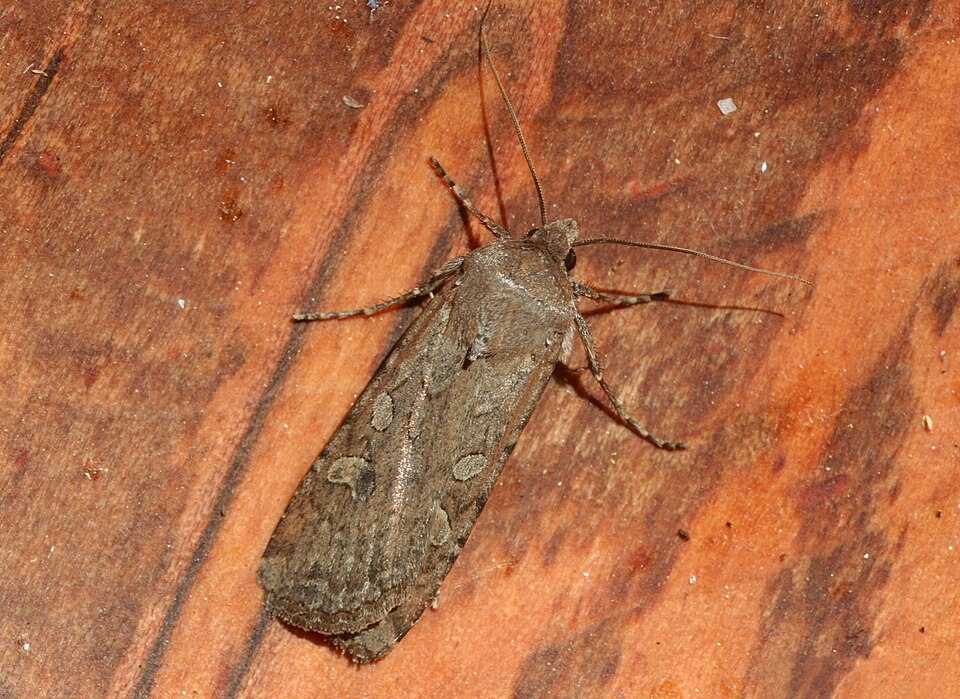
The army cutworm is a caterpillar that grows into a brownish moth called a miller moth. Every summer, millions of these moths fly up into the high mountains. There they become a giant feast for grizzly bears.
How fast is it?
Fun facts
Up to 72 percent of a moth's body can be fat. That makes it richer food than deer or elk meat for a bear.
Scientists know no other animal with so much fat in its body.
In one mountain park, people saw a blizzard of millions of these moths.
The caterpillars hatch in late autumn and keep eating through the winter, mostly at night.
The moths help pollinate flowers and are an important food for bats.
Most asked questions about Army cutworm
?Why do grizzly bears eat army cutworm moths?
The moths are packed with fat, so a bear can eat thousands of them and get lots of energy for winter.
?Are miller moths harmful?
No. They can be a nuisance when many fly into houses, but they do not bite or sting.
?What does the army cutworm eat?
The caterpillar eats grasses and crops like grain and alfalfa. The grown-up moth drinks flower nectar.
For bug experts
- Scientific name
- Euxoa auxiliaris
- Group
- Moths
- Family
- Noctuidae
- Classification
- Insecta > Lepidoptera > Noctuidae
- Lives on
- North America
- Also known as
- Miller moth
Where the facts come from
- Army cutworm (Wikipedia, CC BY-SA 4.0): what it looks like, where it lives, what it eats, sizes and fun facts, retold in simple words.
- Picture by Whitney Cranshaw, Colorado State University, Bugwood.org. CC BY 3.0 us, Wikimedia Commons. The round sticker of this bug is cut from the same picture.
If we got something wrong, sorry, we are bug fans, not a science journal. Tell us at hello@bugwiki.app and we will fix it.
 Atlas moth
 Luna moth
 Hummingbird hawk-moth
 Domestic silk moth
 Isabella tiger moth
 Polyphemus moth
 Tropical fire ant
 Woolly apple aphid
 White garden snail
 Hessian fly
 Striped earwig
 Passionvine hopper