

Cabbage looper
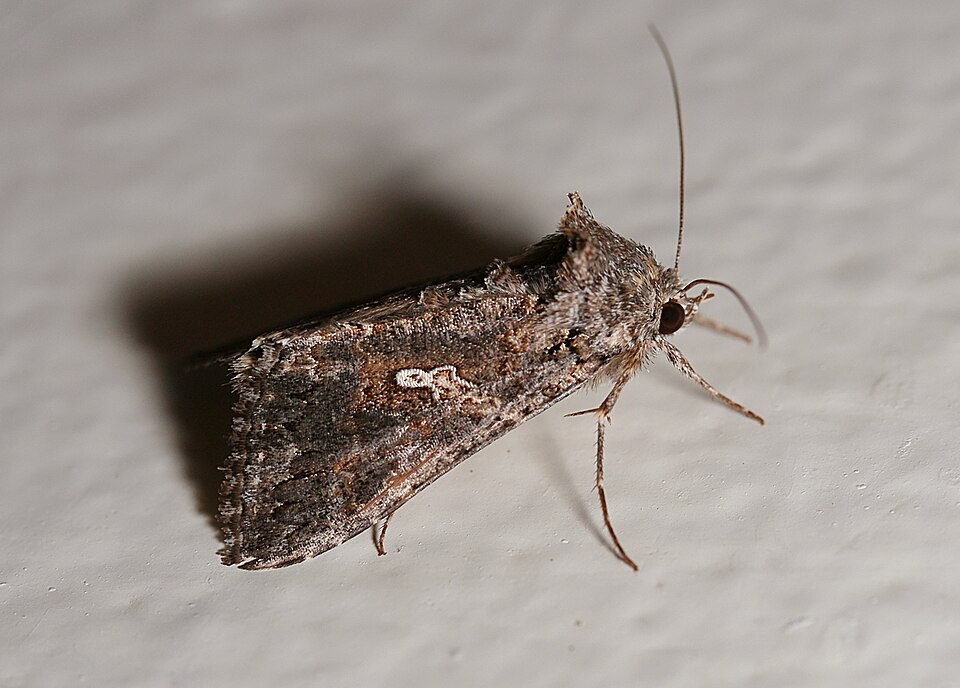
The cabbage looper is a medium-sized moth from the owlet moth family. Its caterpillar is smooth and green with a white stripe on its side. It walks in a funny way, bending its body into a loop and then stretching out again.
How fast is it?
Fun facts
It is a travelling moth that flies long distances, which is why it lives in so many places.
Both the males and the females give off a special smell to attract a mate, which is unusual for moths.
Its eggs are tiny white domes with ridges, only about half a millimetre wide.
A mother usually lays her eggs one at a time on the underside of leaves.
A mother moth likes to lay her eggs on the kind of plant she ate when she was a caterpillar.
Most asked questions about Cabbage looper
?What does the cabbage looper eat?
Its caterpillars eat cabbage, broccoli and many other plants, more than 160 kinds.
?Why is it called a looper?
Because the caterpillar arches its back into a loop when it crawls.
?Is the cabbage looper harmful?
Not to people. It is a small pest that nibbles vegetable leaves.
For bug experts
- Scientific name
- Trichoplusia ni
- Group
- Moths
- Family
- Noctuidae
- Classification
- Insecta > Lepidoptera > Noctuidae
- Lives on
- North America, Europe, Asia
Where the facts come from
- Cabbage looper (Wikipedia, CC BY-SA 4.0): what it looks like, where it lives, what it eats, sizes and fun facts, retold in simple words.
- Picture by Calibas. Public domain, Wikimedia Commons. The round sticker of this bug is cut from the same picture.
If we got something wrong, sorry, we are bug fans, not a science journal. Tell us at hello@bugwiki.app and we will fix it.
 Atlas moth
 Luna moth
 Hummingbird hawk-moth
 Domestic silk moth
 Isabella tiger moth
 Polyphemus moth
 Bloody-nosed beetle
 Gypsy cuckoo bumblebee
 Vedalia beetle
 Batman hoverfly
 European Amazon ant
 Ivy bee