

Cluster fly
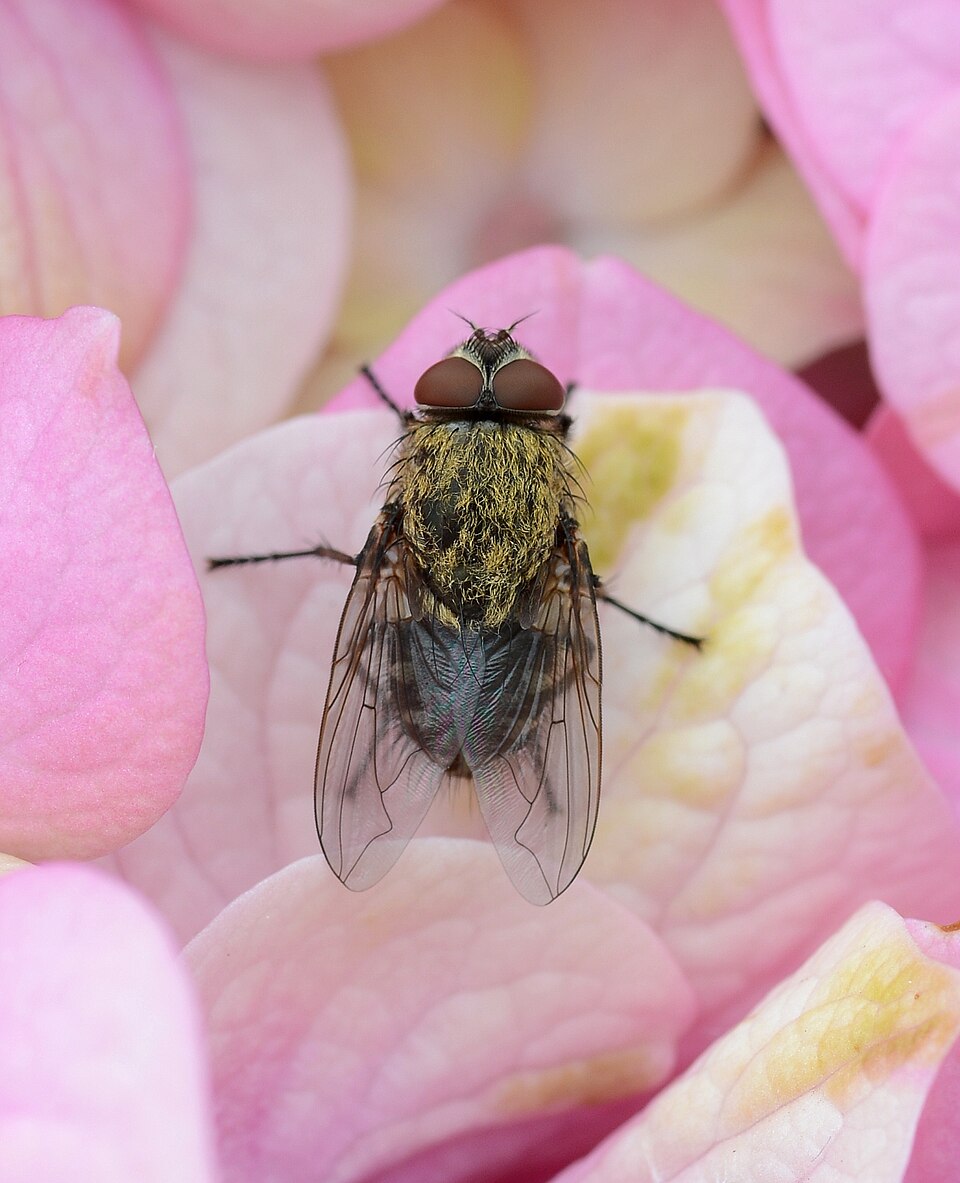
The cluster fly is a dark grey fly, a little bigger than a house fly, with a checkered silvery belly. In autumn lots of them crowd together in attics and near windows to spend the winter. That is how it got its name.
How big is it?
How long is it?
How big is Cluster fly compared to YOU?
Just maths in your browser. Nothing is saved or sent anywhere.
How fast is it?
Fun facts
When you squash one, it smells like buckwheat honey, which is why it is also called the buckwheat fly.
In winter it hides in attics, old bird nests or under tree bark and lives off its own fat until spring.
Newly hatched flies have lots of golden hairs, which can wear off as they get older.
It probably travelled from Europe to America long ago on ships, maybe in soil with earthworms.
When it rests, the tips of its wings overlap, unlike a house fly.
Most asked questions about Cluster fly
?Why are there so many flies in my attic in autumn?
They may be cluster flies. They gather in warm attics and lofts to sleep through the winter.
?Are cluster flies dangerous?
No. They do not bite or sting. They are just annoying when many come inside.
?What does a cluster fly eat?
Its maggots feed on earthworms. The grown-ups mostly feed on plants.
For bug experts
- Scientific name
- Pollenia rudis
- Named by
- Fabricius, 1794
- Group
- Flies and mosquitoes
- Family
- Polleniidae
- Classification
- Insecta > Diptera > Polleniidae
- Lives on
- Europe, North America
- Also known as
- Common cluster fly, Attic fly, Loft fly, Buckwheat fly
Where the facts come from
- Pollenia rudis (Wikipedia, CC BY-SA 4.0): what it looks like, where it lives, what it eats, sizes and fun facts, retold in simple words.
- Picture by Alvesgaspar. CC BY-SA 3.0, Wikimedia Commons. The round sticker of this bug is cut from the same picture.
If we got something wrong, sorry, we are bug fans, not a science journal. Tell us at hello@bugwiki.app and we will fix it.
 Housefly
 New World screwworm fly
 Lovebug
 Tsetse fly
 Common fruit fly
 Asian tiger mosquito
 Oriental rat flea
 Dog flea
 Rain spider
 House pseudoscorpion
 Ghost ant
 Eastern carpenter bee