

Tumbu fly
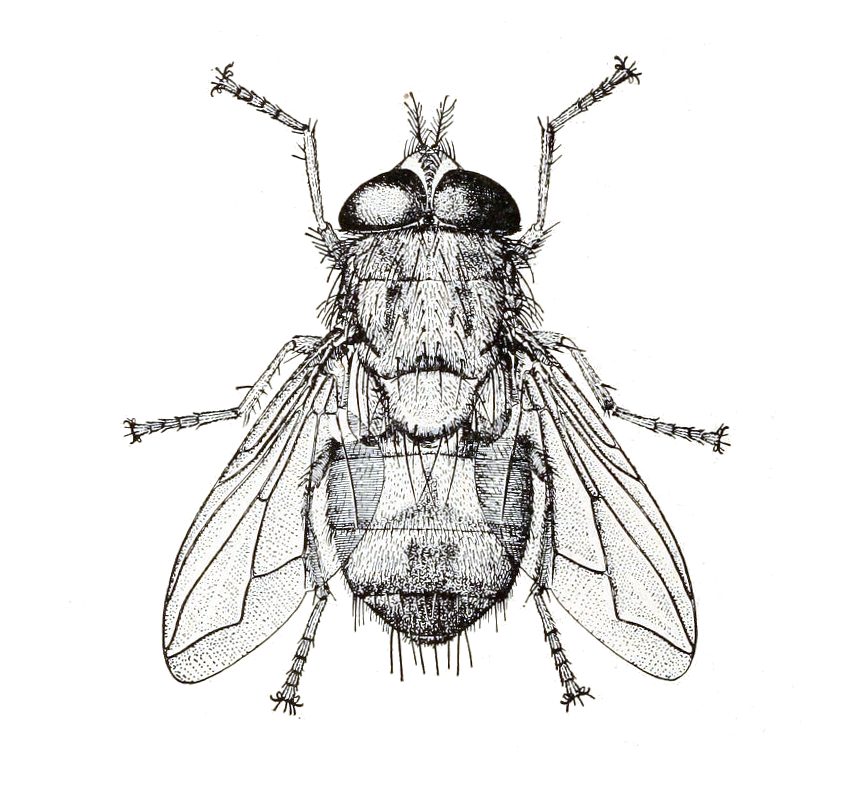
The tumbu fly is a chunky fly from tropical Africa. The grown-up fly is not the problem, but its babies are. They hatch on the ground or on damp clothes and look for an animal to live in for a little while.
How fast is it?
Fun facts
A female lays around 300 eggs in sandy soil.
It sometimes lays its eggs on damp clothes that are hanging out to dry.
The babies can wait in the soil for up to about two weeks for an animal to come by.
Its favourite hosts are dogs and wild rats. People are only accidental hosts.
If the babies get into a chicken, they cannot grow at all.
Most asked questions about Tumbu fly
?Where does the tumbu fly live?
In tropical Africa, from Senegal in the west to South Africa.
?Why is it called the human eater?
Its scientific name means human eater, because its babies can live in human skin, but people are not its usual hosts.
For bug experts
- Scientific name
- Cordylobia anthropophaga
- Named by
- Blanchard, 1872
- Group
- Flies and mosquitoes
- Family
- Calliphoridae
- Classification
- Insecta > Diptera > Calliphoridae
- Lives on
- Africa
- Also known as
- Mango fly, Putzi fly, Skin maggot fly
Where the facts come from
- Cordylobia anthropophaga (Wikipedia, CC BY-SA 4.0): what it looks like, where it lives, what it eats, sizes and fun facts, retold in simple words.
- Picture by Maurice Theodore James. USDA.. Public domain, Wikimedia Commons. The round sticker of this bug is cut from the same picture.
If we got something wrong, sorry, we are bug fans, not a science journal. Tell us at hello@bugwiki.app and we will fix it.
 Housefly
 New World screwworm fly
 Lovebug
 Tsetse fly
 Common fruit fly
 Asian tiger mosquito
 Giant tiger land snail
 Madagascan sunset moth
 Brazilian salmon pink birdeater
 Antilles pinktoe tarantula
 Giant cave cockroach
 Brazilian treehopper