

Blue-winged helicopter
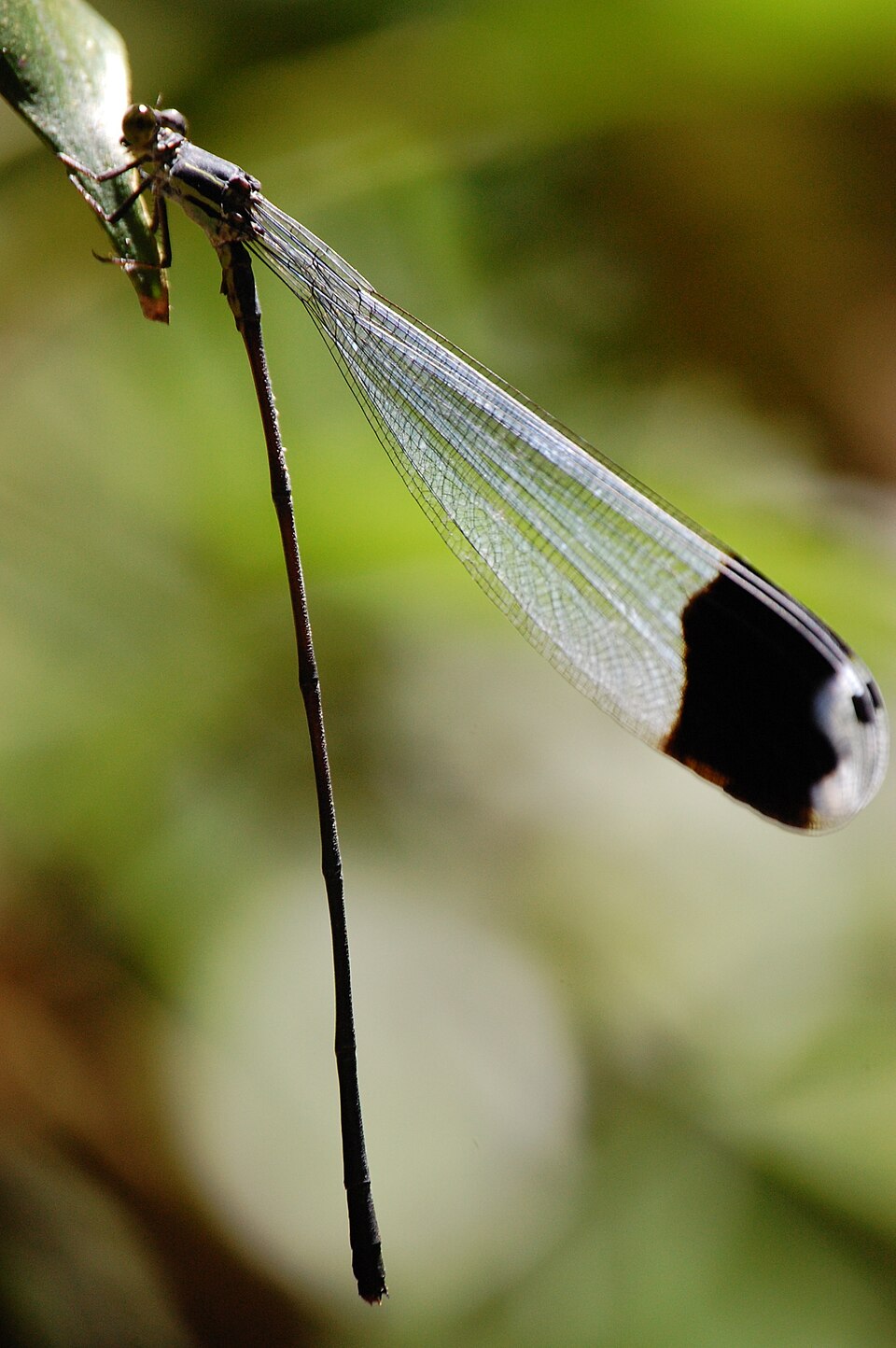
The blue-winged helicopter is the biggest damselfly in the world. It has a long, thin dark body and see-through wings with a dark blue band near the tips. It flies slowly, flapping its four wings one by one, so it looks like a little blue-and-white blinking light in the forest.
How big is it?
How wide are its wings?
How big is Blue-winged helicopter compared to YOU?
Just maths in your browser. Nothing is saved or sent anywhere.
How fast is it?
Fun facts
Its wings can be 19 centimetres across, the widest of any dragonfly or damselfly alive today.
It lays its eggs in little pools of rainwater that collect in holes in trees.
Eggs laid on the same day can hatch weeks or even months apart.
Males guard the biggest tree holes as their own pond.
Unlike most of its relatives, the males are bigger than the females.
Most asked questions about Blue-winged helicopter
?How big is the blue-winged helicopter?
Its wings can reach 19 centimetres across, which makes it the biggest damselfly alive.
?What does the blue-winged helicopter eat?
The adults catch spiders from their webs. The babies eat mosquito larvae and tadpoles in tree hole pools.
?Why is it called a helicopter?
Because it flies slowly with its four wings spread wide, flapping them one after another.
For bug experts
- Scientific name
- Megaloprepus caerulatus
- Group
- Dragonflies and damselflies
- Family
- Coenagrionidae
- Classification
- Insecta > Odonata > Coenagrionidae
- Lives on
- North America, South America
- Also known as
- Forest giant damselfly
Where the facts come from
- Megaloprepus caerulatus (Wikipedia, CC BY-SA 4.0): what it looks like, where it lives, what it eats, sizes and fun facts, retold in simple words.
- Picture by Steven G. Johnson. CC BY-SA 3.0, Wikimedia Commons. The round sticker of this bug is cut from the same picture.
If we got something wrong, sorry, we are bug fans, not a science journal. Tell us at hello@bugwiki.app and we will fix it.
 Emperor dragonfly
 Common whitetail
 Green darner
 Ebony jewelwing
 Globe skimmer
 Blue dasher
 Green banana cockroach
 Vietnamese stick insect
 Rainbow stag beetle
 Caucasus beetle
 Postman butterfly
 Bumblebee millipede