

Giant Palouse earthworm
The giant Palouse earthworm is a big, pale, almost white worm. A grown-up one is about as long as a school ruler. It lives deep underground in the hills of the north-west United States, and it is so hard to find that people once thought it had died out.
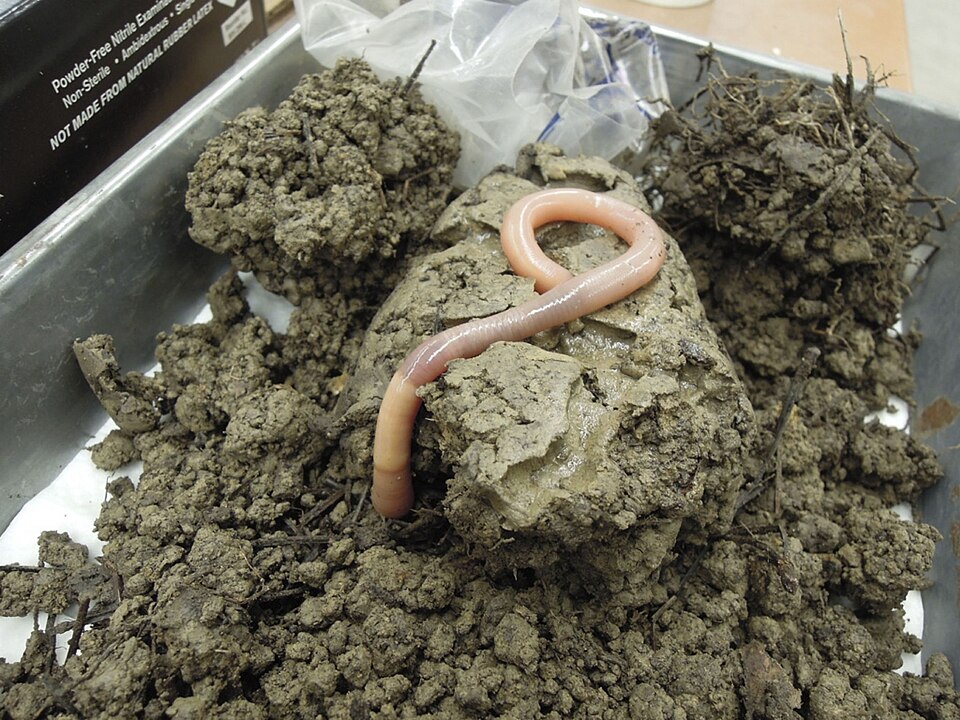
How big is it?
How long is it?
How big is Giant Palouse earthworm compared to YOU?
Just maths in your browser. Nothing is saved or sent anywhere.
How fast is it?
Fun facts
It can dig tunnels as deep as 4 and a half metres, deeper than a house is tall.
When summer gets dry, it crawls deep down and rests in a kind of summer sleep until the rain comes back.
In the 1980s people thought it was extinct, but scientists dug up living ones again in 2010 and 2012.
It has a cousin in Australia, the giant Gippsland earthworm, that can grow to about a metre long.
Most asked questions about Giant Palouse earthworm
?Is the giant Palouse earthworm extinct?
No. People thought so for a while, but scientists found living ones in 2010 and again in 2012.
?How big is the giant Palouse earthworm?
A grown-up one is usually about 20 centimetres long.
?Does the giant Palouse earthworm smell like lilies?
Old stories said so, but the worms found in 2010 did not smell like lilies and did not spit.
Myth buster
Myth: The giant Palouse earthworm smells like lilies and can spit to defend itself.
Truth: People used to believe that, but the worms found in 2010 did not smell like lilies and did not spit.
For bug experts
- Scientific name
- Driloleirus americanus
- Named by
- Smith, 1897
- Group
- Snails, slugs and worms
- Family
- Megascolecidae
- Classification
- Clitellata > Megascolecidae
- Lives on
- North America
- Also known as
- Washington giant earthworm
Where the facts come from
- Giant Palouse earthworm (Wikipedia, CC BY-SA 4.0): what it looks like, where it lives, what it eats, sizes and fun facts, retold in simple words.
- Picture by Chris Baugher. CC BY 2.0, Wikimedia Commons. The round sticker of this bug is cut from the same picture.
If we got something wrong, sorry, we are bug fans, not a science journal. Tell us at hello@bugwiki.app and we will fix it.
 Garden snail
 Giant African land snail
 Leopard slug
 Bladder snail
 Medicinal leech
 Common earthworm
 Dark giant horsefly
 Orchard spider
 Evergreen bagworm
 Picasso bug
 Tricoloured bumblebee
 Ailanthus webworm