

Mediterranean flour moth
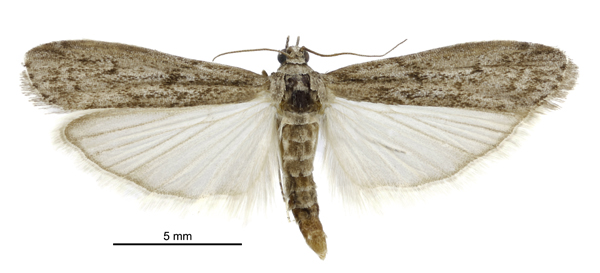
The Mediterranean flour moth is a small grey moth with black zigzag lines on its front wings. It lives where flour is kept, like mills, bakeries and sometimes kitchen cupboards. Its caterpillars grow up inside the flour.
How big is it?
How wide are its wings?
How big is Mediterranean flour moth compared to YOU?
Just maths in your browser. Nothing is saved or sent anywhere.
How fast is it?
Fun facts
Its caterpillars spin silk tubes in the flour, and in mills the silk can clog up the machines.
One female can lay up to 678 eggs, often right in the flour.
It was first found in a flour mill in Germany in 1877, and nobody knows for sure where it came from.
In warm weather it can go from egg to adult moth in just five to seven weeks.
The caterpillars are white or pink with black spots and a dark head.
Most asked questions about Mediterranean flour moth
?Are flour moths harmful?
They do not hurt people, but their caterpillars spoil flour and grain.
?What do flour moths eat?
The caterpillars eat flour and grains. The adult moths do not eat at all.
?How do you keep flour moths away?
Keep flour and grain in closed containers and keep cupboards clean.
For bug experts
- Scientific name
- Ephestia kuehniella
- Group
- Moths
- Family
- Pyralidae
- Classification
- Insecta > Lepidoptera > Pyralidae
- Lives on
- Europe, North America, South America, Africa, Asia, Australia and Oceania
- Also known as
- Mill moth
Where the facts come from
- Mediterranean flour moth (Wikipedia, CC BY-SA 4.0): what it looks like, where it lives, what it eats, sizes and fun facts, retold in simple words.
- Picture by Birgit E. Rhode, Landcare Research New Zealand Ltd.. CC BY 4.0, Wikimedia Commons. The round sticker of this bug is cut from the same picture.
If we got something wrong, sorry, we are bug fans, not a science journal. Tell us at hello@bugwiki.app and we will fix it.
 Atlas moth
 Luna moth
 Hummingbird hawk-moth
 Domestic silk moth
 Isabella tiger moth
 Polyphemus moth
 American house spider
 Bluebottle
 Cigarette beetle
 Chilean recluse
 House cricket
 Southern house spider