

Oak processionary
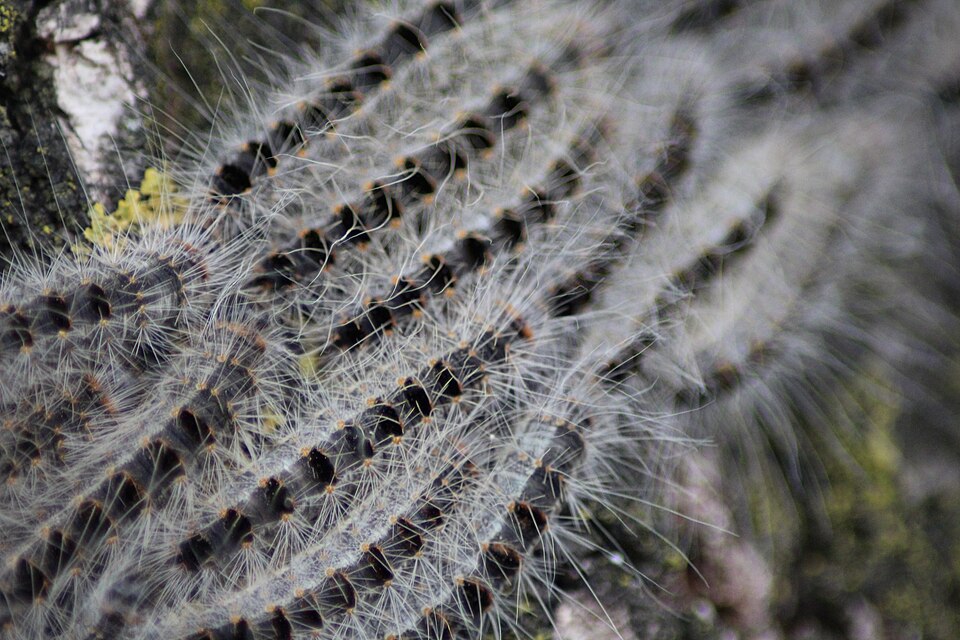
The oak processionary is a moth whose hairy caterpillars live in oak trees. The caterpillars walk in long lines, one behind the other, like a parade. That is where the name comes from. The grown-up moth is brown, tan and white, so it hides well on oak bark.
How big is it?
How wide are its wings?
How big is Oak processionary compared to YOU?
Just maths in your browser. Nothing is saved or sent anywhere.
How fast is it?
Fun facts
One older caterpillar can have up to 63,000 tiny hairs on its back.
The caterpillars build white silk nests on oak trunks and rest in them during the day.
At night they crawl out in single file to eat leaves, and come back home the same way.
Its hairs break off easily, float in the air and can stay itchy for years.
It came to London around 2005 as eggs on young oak trees brought from mainland Europe.
Most asked questions about Oak processionary
?Why is it called the processionary?
Because the caterpillars march in long lines, nose to tail, like a procession or parade.
?What does the oak processionary eat?
The caterpillars eat mostly oak leaves.
For bug experts
- Scientific name
- Thaumetopoea processionea
- Named by
- Linnaeus, 1758
- Group
- Moths
- Family
- Notodontidae
- Classification
- Insecta > Lepidoptera > Notodontidae
- Lives on
- Europe
- Also known as
- Oak processionary moth
Where the facts come from
- Oak processionary (Wikipedia, CC BY-SA 4.0): what it looks like, where it lives, what it eats, sizes and fun facts, retold in simple words.
- Picture by Kleuske. CC BY-SA 3.0, Wikimedia Commons. The round sticker of this bug is cut from the same picture.
If we got something wrong, sorry, we are bug fans, not a science journal. Tell us at hello@bugwiki.app and we will fix it.
 Atlas moth
 Luna moth
 Hummingbird hawk-moth
 Domestic silk moth
 Isabella tiger moth
 Polyphemus moth
 Roman snail
 Peacock tarantula
 Pipevine swallowtail
 Eastern Hercules beetle
 Spicebush swallowtail
 New Zealand glowworm