

Organ pipe mud dauber
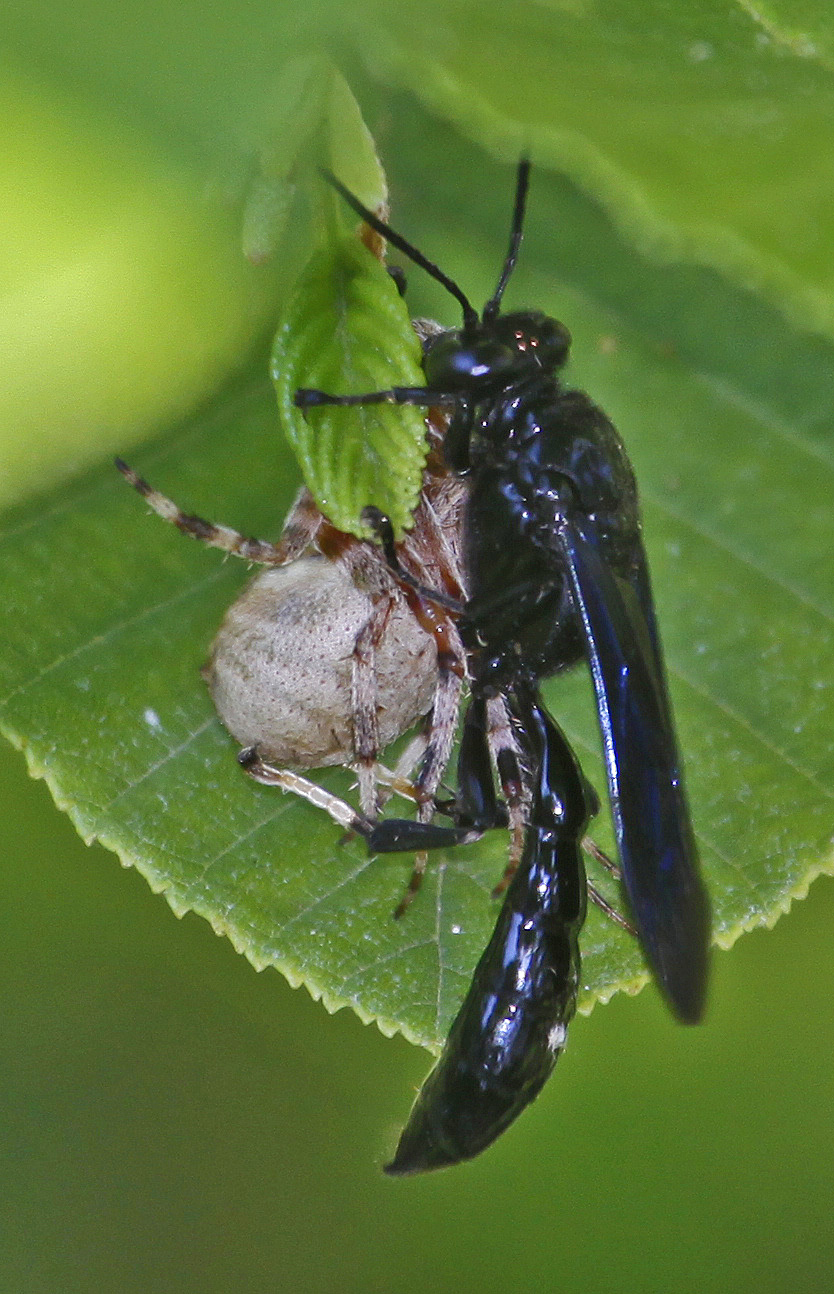
The organ pipe mud dauber is a shiny black wasp with pale yellow-white feet on its back legs. It builds its nest from mud in long tubes standing side by side, like the pipes of a church organ. It is a very calm wasp that keeps the number of spiders down.
How fast is it?
Fun facts
It builds its nests on smooth, shady walls, like the underside of bridges, close to mud and a forest.
A female usually builds five or six mud pipes in a group.
Unlike most wasps, the father stays at the nest door and guards the babies from intruders.
New wasps have to chew their way out of the mud. The more pipes are stacked on top, the harder that is.
A young female starts building her own nest within two days of leaving the nest she grew up in.
Most asked questions about Organ pipe mud dauber
?Why is it called organ pipe mud dauber?
Its mud nests are long tubes side by side that look like the pipes of an organ.
?What does the organ pipe mud dauber eat?
Its babies eat spiders that the mother has caught and stored in the mud tubes.
For bug experts
- Scientific name
- Trypoxylon politum
- Group
- Wasps and hornets
- Family
- Crabronidae
- Classification
- Insecta > Hymenoptera > Crabronidae
- Lives on
- North America
Where the facts come from
- Organ pipe mud dauber (Wikipedia, CC BY-SA 4.0): what it looks like, where it lives, what it eats, sizes and fun facts, retold in simple words.
- Picture by Judy Gallagher. CC BY 2.0, Wikimedia Commons. The round sticker of this bug is cut from the same picture.
If we got something wrong, sorry, we are bug fans, not a science journal. Tell us at hello@bugwiki.app and we will fix it.
 European hornet
 Northern giant hornet
 Bald-faced hornet
 Red velvet ant
 Eastern cicada killer
 Asian hornet
 Eastern lubber grasshopper
 Jersey tiger
 Bogong moth
 Greenhouse millipede
 Giant swallowtail
 Black vine weevil